Dinner
Maple Mustard Sheet-Pan Salmon and Vegetables
A colorful salmon dinner with caramelized potatoes, crisp broccoli, and a tangy glaze.
 Maya BennettJuly 1, 20268 min read
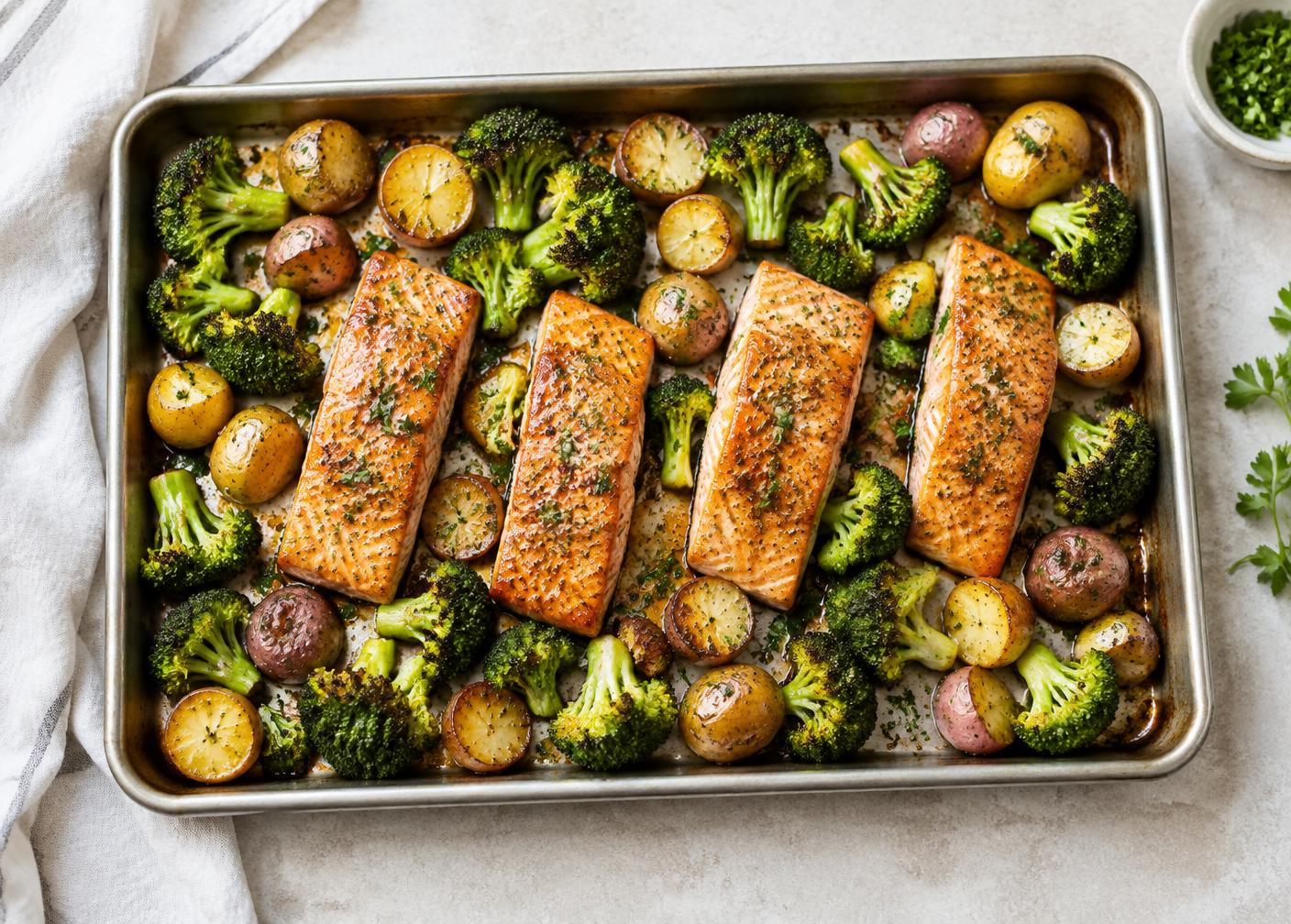
A good sheet-pan dinner is less about throwing everything into the oven at once and more about giving each ingredient the time it needs. Potatoes take longer than broccoli, and broccoli takes longer than salmon. This recipe staggers them by a few minutes, so the potatoes become crisp, the broccoli chars at the edges, and the fish stays moist.
The glaze is deliberately simple: maple syrup for gentle sweetness, Dijon mustard for tang, lemon for brightness, and garlic for depth. It looks glossy and impressive but uses ingredients that are easy to keep on hand.
Ingredients
Gather four center-cut salmon fillets, about five ounces each; one pound baby potatoes, halved; four cups broccoli florets; three tablespoons olive oil; one teaspoon kosher salt; and half a teaspoon black pepper. For the glaze, mix two tablespoons Dijon mustard, one and a half tablespoons pure maple syrup, one tablespoon lemon juice, one grated garlic clove, and half a teaspoon smoked paprika. Chopped parsley and lemon wedges are useful for serving.
Center-cut salmon pieces cook most evenly. If one end is noticeably thinner, fold it underneath itself before roasting. Cut the broccoli into similar medium florets and halve any large potatoes again.
Start with the potatoes
Heat the oven to 425°F and place a large rimmed sheet pan inside while it warms. A hot pan helps the cut sides of the potatoes begin browning immediately. Toss the potatoes with one tablespoon olive oil, half a teaspoon salt, and a little pepper.
Carefully remove the hot pan, arrange the potatoes cut-side down, and roast for fifteen minutes. Meanwhile, whisk the glaze and toss the broccoli with one tablespoon oil and the remaining salt.
Add the broccoli and salmon
After fifteen minutes, turn the potatoes and push them toward the edges. Add the broccoli in a single layer and roast for eight minutes. Pat the salmon dry, rub it with the last tablespoon of oil, and brush generously with half the glaze.
Make room in the center of the pan and add the salmon skin-side down. Roast everything for eight to twelve minutes. Brush the fish with the remaining glaze halfway through. Salmon is ready when it flakes at the thickest point but is still slightly translucent in the center, or when an instant-read thermometer shows about 125°F to 130°F for medium. If you prefer fully firm salmon, cook it to 145°F.
The secret to an actually crisp sheet pan
Crowding traps steam. Use the largest pan you have and leave a little space around the vegetables. Dry the broccoli after washing and make sure the potatoes are coated rather than swimming in oil. If your pan is small, use two pans and rotate their positions halfway through roasting.
The preheated pan also matters. It gives the potatoes direct heat before they have time to release moisture. Do not line the tray with a silicone mat, which insulates the vegetables; parchment is fine, but direct contact with metal browns best.
Variations that still work
Swap broccoli for trimmed asparagus and add it with the salmon rather than earlier. Brussels sprouts can replace broccoli if they are halved and added after the potatoes have roasted for ten minutes. Sweet potatoes are delicious but should be cut into small cubes so they cook in time.
Honey can replace maple syrup. Whole-grain mustard adds texture in place of some Dijon. If you like heat, stir a pinch of red pepper flakes into the glaze. Trout fillets also work, though thin pieces may be ready in six to eight minutes.
Serving ideas
This recipe is a complete meal as written. A spoonful of plain yogurt mixed with lemon and herbs is a nice cool contrast. For a larger table, add a grain salad or warm bread. Leftover salmon is excellent flaked over greens with the roasted vegetables and a squeeze of lemon.
Make-ahead and storage
The glaze can be whisked up to four days ahead and refrigerated. Potatoes may be halved and held in cold water for a day; dry them thoroughly before roasting. Broccoli can be cut in advance.
Store cooked salmon and vegetables in separate airtight containers for up to two days. Reheat the vegetables in a 400°F oven until hot, then add the salmon for only the final few minutes. A microwave works, but use medium power in short intervals to avoid overcooking the fish.
Frequently asked questions
Can I use frozen salmon? Yes, but thaw it completely in the refrigerator and pat it very dry before glazing.
Should I remove the skin? No. The skin helps protect the fish from the hot pan and is easy to lift away after cooking if you do not want to eat it.
How do I know whether the salmon is done? Press the thickest part gently with a fork. The flakes should begin to separate, while the center remains moist. Remember that it continues cooking for a minute after leaving the oven.
With the timing understood, this method becomes a template: sturdy vegetables first, quick vegetables next, and delicate fish last. That small bit of planning is what turns a crowded tray into a dinner you will want to repeat.