Breakfast
Fluffy Lemon Ricotta Pancakes with Blueberries
Tender, sunny pancakes with crisp edges and a cloud-soft center.
 Maya BennettJuly 1, 20268 min read
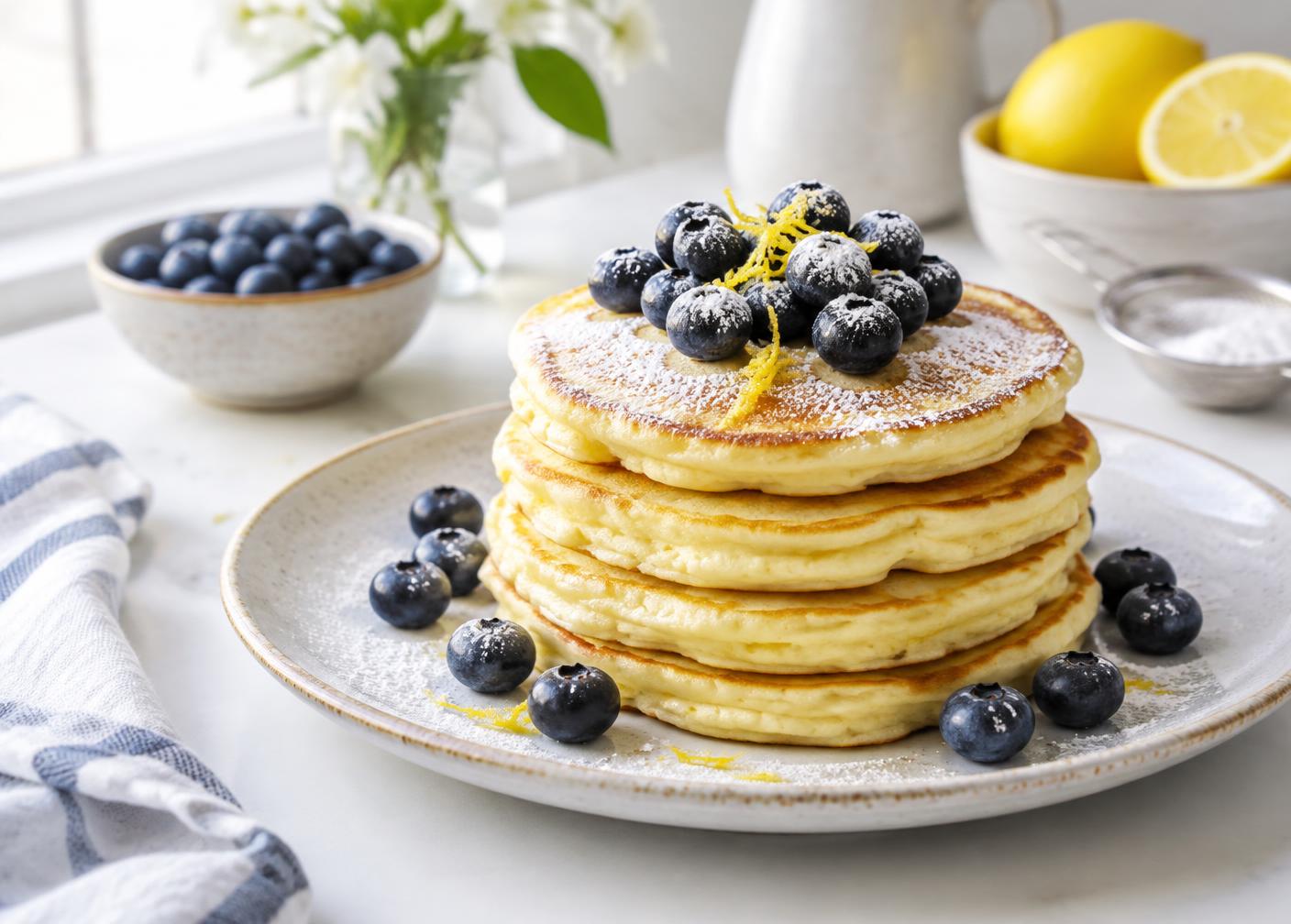
Ricotta changes a pancake in the best possible way. It makes the center tender and almost custardy while the outside still develops the lacy, golden edges that make a hot griddle irresistible. Lemon zest keeps the batter bright, and blueberries provide small bursts of fruit without making breakfast overly sweet.
These pancakes are substantial but not heavy. The key is using a light hand when mixing and giving the batter a short rest. That pause lets the flour hydrate and the baking powder begin working, which means a taller, softer stack.
Ingredients
For about twelve medium pancakes, you need one and a half cups all-purpose flour; two tablespoons sugar; two teaspoons baking powder; half a teaspoon baking soda; half a teaspoon kosher salt; one cup whole-milk ricotta; three-quarters cup milk; two large eggs; the finely grated zest and two tablespoons juice of one lemon; one teaspoon vanilla; three tablespoons melted unsalted butter; and one cup fresh blueberries. Keep extra butter or neutral oil for the pan.
Whole-milk ricotta gives the best texture. If there is obvious liquid sitting in the container, pour it off, but there is no need to press the cheese dry. Fresh blueberries are easiest because frozen berries can streak the batter, although frozen will still taste good.
Mix the batter gently
Whisk the flour, sugar, baking powder, baking soda, and salt in a large bowl. In a second bowl, whisk the ricotta, milk, eggs, lemon zest, lemon juice, vanilla, and melted butter until mostly smooth. Small ricotta curds are welcome.
Pour the wet mixture into the dry ingredients. Fold with a rubber spatula just until no broad pockets of dry flour remain. The batter should be thick and a little lumpy. Overmixing develops gluten and makes pancakes chewy, so stop sooner than your instinct suggests. Let the batter stand for ten minutes.
Cook for golden edges
Heat a large nonstick or well-seasoned cast-iron skillet over medium-low heat. Add a thin film of butter. Scoop a scant quarter cup of batter for each pancake and gently spread it into a four-inch round. Scatter several blueberries over the surface rather than stirring them into the whole bowl; this keeps their color cleaner and distributes them evenly.
Cook until the edges look set and bubbles rise through the center, about two to three minutes. Slide a thin spatula underneath and flip once. Cook the second side for another one to two minutes. If the outside browns before bubbles form, lower the heat. Wipe away dark butter between batches and add a fresh little bit.
Keep finished pancakes on a wire rack set over a baking sheet in a 200°F oven. A rack prevents the bottoms from steaming and becoming soft. Serve with yogurt, maple syrup, lemon curd, or simply more berries.
Why ricotta pancakes need lower heat
The moist, thick batter takes longer to cook through than a standard pancake. Medium-high heat will brown the outside while leaving a gummy center. A steady medium-low flame gives the lift time to develop. The first pancake is your test: cut it open, adjust the heat, and then continue.
Useful substitutions
Buttermilk can replace regular milk; omit the lemon juice if you use it. Orange zest makes a softer, sweeter variation. Raspberries or thinly sliced strawberries work in place of blueberries. For a lightly savory version, leave out the sugar and berries, then add chopped chives and black pepper.
A cup-for-cup gluten-free flour blend can work, though the pancakes may be more delicate. Let that batter rest for fifteen minutes. Plant-based ricotta varies widely in moisture and was not used to develop this version, so results may differ.
Make them ahead
The dry ingredients can be mixed and stored for weeks. The wet ingredients can be combined the night before, except for the melted butter, which should be stirred in before cooking. Once wet and dry meet, cook the batter within about thirty minutes so the leavening remains active.
Cooked pancakes refrigerate well for three days. Layer them with parchment in a sealed container. For longer storage, freeze them in a single layer, then transfer to a freezer bag for up to two months. Reheat in a toaster or a 350°F oven until the edges regain a little crispness.
Frequently asked questions
Why are my pancakes flat? Old baking powder is often responsible. Also check that the batter was not overmixed or left sitting for too long.
Can I blend the ricotta smooth? You can, but the pancakes lose some of their delicate texture. Small curds melt into creamy pockets during cooking.
Can I double the recipe? Yes. Mix two separate batches if possible, because a very large bowl encourages overmixing and the final pancakes may sit too long before reaching the pan.
The appeal of this breakfast is its contrast: bright lemon against creamy ricotta, warm pancakes against cool berries, and crisp edges around a tender center. It feels like a café order but is forgiving enough for a sleepy home kitchen.